Dave Daley
Dr. Dave Daley is a fifth-generation rancher from Butte County, California who has spent his life advocating for farmers and ranchers. Dr. Daley has spent the majority of his time on his ranch in California with his two sons Kyle and Rob, and his daughter Kate, who all continue to help manage the ranch today.
The Daley family is not new to California; their lineage dates to the 1850s, during the first California gold rush. It was at this time the Daley family decided to settle in the California Valley. They have been ranching this land since the 1880s, when Dr. Daley’s ancestors began their family cow-calf operation. This is the same operation run today, primarily by Dr. Daley and his oldest son, Kyle.
Today, their ranch spans over the foothills and into the higher country of California where they graze their cattle on federal and private lands. However, this land is unique in many ways; rather than grassy rolling hills and valleys, the country the Daley family ranches on is timber rich, an area that was originally meant for logging rather than ranching.
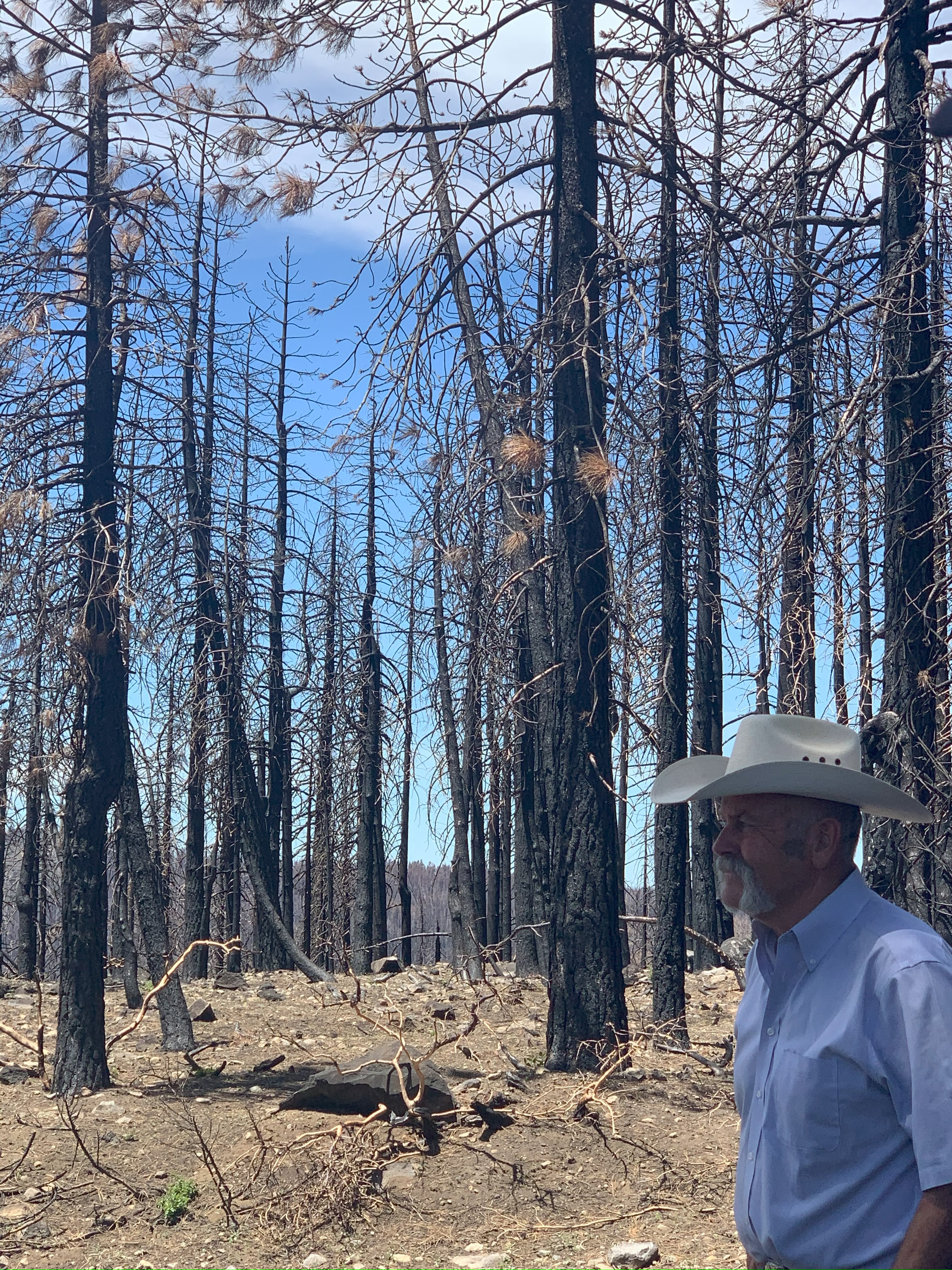
This timber-heavy land has faced many challenges as it has been plagued with wildfires. One wildfire in particular, the Bear Fire, tore through Dr. Daley’s ranch destroying their family legacy. After the fire Dr. Daley shared his experience nationwide, leveraging his loss to try and create change for Californian ranchers who have also been devastated by the politics of wildfires.
In addition to being a rancher, Dr. Daley has spent over 30 years actively involved with the College of Agriculture at California State University, Chico, where he has brought his knowledge of ranching and public lands to his students and colleagues. Dr. Daley has spent his time at CSU Chico focusing on animal welfare and countless other impactful agriculture issues. But his pride and joy is his ranching operation.
A Steward of Public and Private Land
Outside of the classroom, Dr. Daley works on the ranch, managing their cattle and stewarding the private and public land they graze on. The federal land they ranch on is in the Plumas National Forest and is owned by the National Forest Service.
“Over half of California is owned by the federal government,” Dr. Daley shared. With this realization, he knew ranchers in California needed representation when it came to public lands. From serving as the President of the California Cattlemen’s Association, to serving as chair of the California Public Lands Council, Dr. Daley knew as a rancher and educator it was important for someone to step forward to help organize the public lands ranchers in the state to have a voice. These positions allowed Dr. Daley to advocate for the agriculture industry and face federal land issues head-on as he was able to connect with other ranchers who were facing the same hardships he had while grazing on federal land.
During devastating times like droughts and wildfires, Dr. Daley found solidarity with other public lands ranchers. The opportunity to connect with like-minded individuals who were facing the same challenges has led Dr. Daley to pursue innovative solutions to everyday issues. Through his university research and leadership positions with PLC In the face of hardship, Dr. Daley became even more involved in the Public Lands Council, advocating for the representation of public lands ranchers in the West.
Daley shared that this is the reason he originally became involved with PLC: not only to spread awareness and advocate for California ranchers, but to have the opportunity to problem-solve with ranchers who were facing the same issues he had across the country. Dr. Daley knew when it came to public lands ranching; the entire West was facing the same bureaucratic issues.
Looking to the Future
In the future, Dr. Daley calls on young ranchers to stay involved. He asks that young farmers and ranchers try to stay in touch with their roots, “even once a year.” Dr. Daley expressed that the importance of this cannot be understated. As the average age of the American rancher is steadily increasing, younger generations are not taking the time needed to take over the family farm and ranch. It is imperative that young ranchers and farmers stay involved, especially in organizations like the Public Lands Council.
“Federal lands are administered in Washington, D.C. 3,000 miles away, and it can be hard to get the attention of lawmakers, so we need the representation of organizations like PLC.” stated Dr. Daley.
Without strong voices who really support around them at the state level, the public lands ranching community across the West would not be as visible as it is today. PLC is proud to highlight Dr. Daley and the hard work he has put into the agriculture industry, agriculture research, PLC, and other industry organizations.