
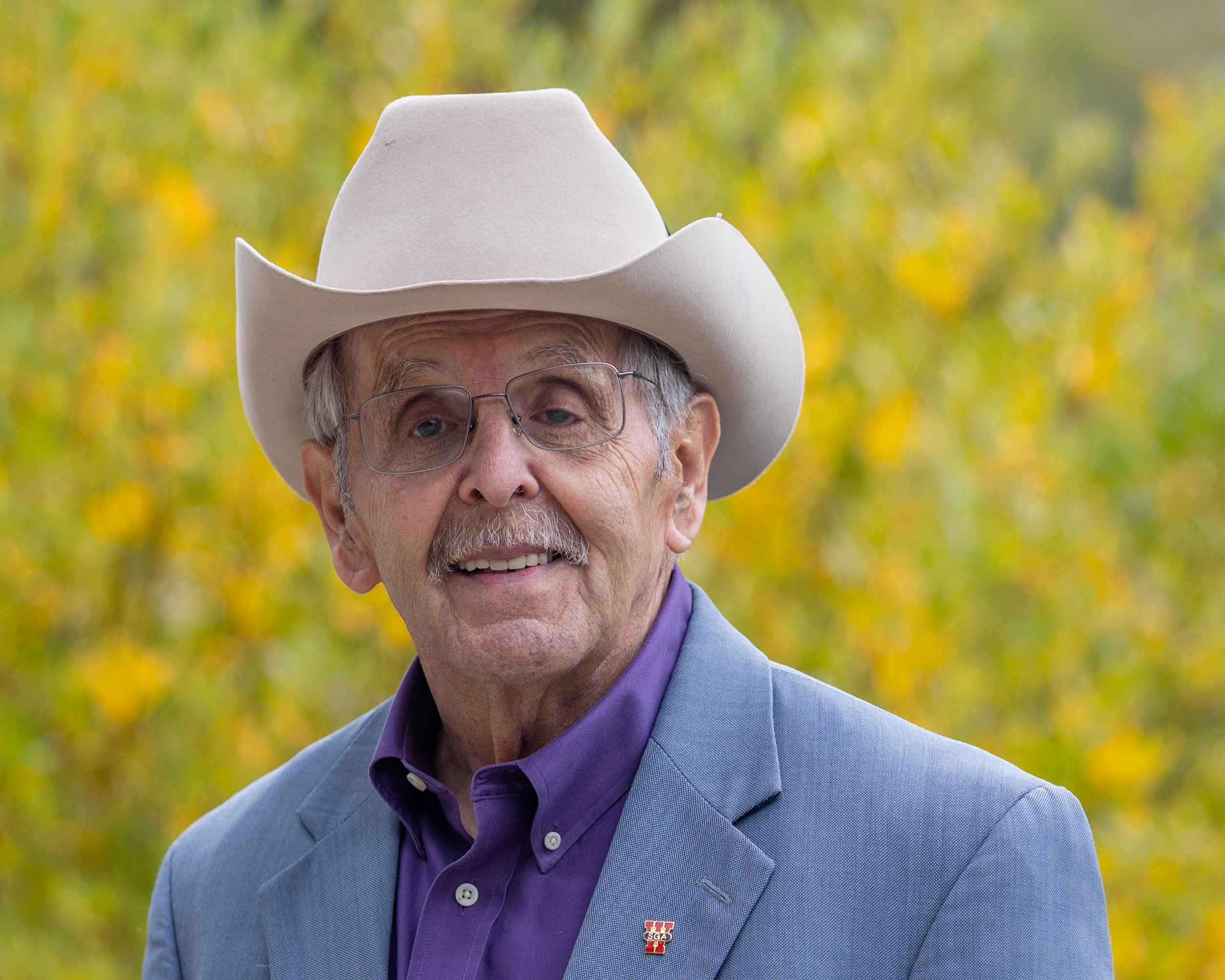
JIM MAGAGNA
WYOMING STOCK GROWERS
For Jim Magagna, ranching was never simply a career choice. It was the life he grew up in, the work he returned to after schooling, and the foundation for nearly everything he has done since.
A native of Rock Springs, Wyoming, Jim grew up on the family ranch his grandfather started and his father later took over. When his father passed away while Jim was in college, he returned to the ranch and began running the operation at just 24 years old.
While ranching was, and always has been, familiar, Jim knew there was more he could learn.
“I grew up on the ranch, but I knew I needed to learn some different things that would help me as a rancher,” Jim says.
That mindset led him to pursue a business degree from the University of Notre Dame and later a law degree from Stanford University. While his education took him far from Wyoming, his plans for the future never strayed far from home.
When asked at Stanford what he wanted to do after graduation, Jim had a different answer than many of his classmates – “I want to be a shepherd.”
He returned to Wyoming after law school and continued building his ranching operation. He never practiced law, but the education he gained has remained an important part of the work he does today.
From Rancher to Advocate
Jim has spent decades working at the intersection of ranching and policy.
Before becoming Executive Vice President of the Wyoming Stock Growers Association in 1998, he served as Director of the Wyoming Office of State Lands and Investments. He has also served as president of the American Sheep Industry Association and the National Public Lands Council, and he has represented agriculture on numerous state, national, and local councils and advisory boards.
Through it all, Jim says his perspective remains grounded in the ranching community. That foundation shapes how he approaches the issues facing Wyoming ranchers. His work involves state and federal policy, and his background in both ranching and law gives him another lens through which to consider those issues.
That perspective is particularly important in Wyoming, where Jim’s own experience as a public lands rancher has shaped his understanding of the challenges and opportunities facing the industry.
Grounded in Public Lands
Growing up as a public lands grazer, using both BLM and Forest Service lands, Jim uses those experiences to shape his work with Wyoming ranchers today.
As Jim shares it, the connection between ranching and the land is straightforward. Ranchers depend on the health of the resources they manage, and their livelihoods are tied directly to the condition of the range.
“Ranchers are connected to nature, and while some try to portray us as abusing nature, the reality is we're the ones who foster nature in good range conditions and rangelands because our livelihoods depend on it.”
That connection is also rooted in the communities where Jim has spent his life.
Wyoming’s relatively small population means ranching relationships often extend well beyond the ranch gate. Neighbors, business owners, agency personnel, and community members frequently have longstanding connections.
The Challenges Ranchers Face
After decades in the industry, Jim has seen the challenges facing Wyoming ranchers change, but some remain familiar. When asked about the biggest challenges facing his members and ranchers today, he pointed first to drought.
“The single biggest challenge today and for the last couple years is drought. There's no question about that,” Jim says.
Drought has long been one of the realities Wyoming ranchers must plan around, affecting forage, livestock decisions, and the ability of an operation to maintain its herd. Jim has also described weather, government, and markets as three critical factors ranchers must continually navigate.
For Jim, understanding those challenges has meant staying connected to both the ranch and the broader systems that influence it. That balance has defined much of his career.
Home on the Range
Jim’s career has taken him far beyond the Wyoming ranch where it began, but the foundation has remained the same.
He grew up ranching. He returned to ranching, and even as his work expanded into policy and advocacy, he has continued to approach those issues from the perspective of someone who understands what decisions mean on the ground.
His story is an example of how experience gained on the ranch can carry into every part of the work needed to protect and strengthen the future of ranching.
For Jim, the path has always led back to the same place – home on the range.