
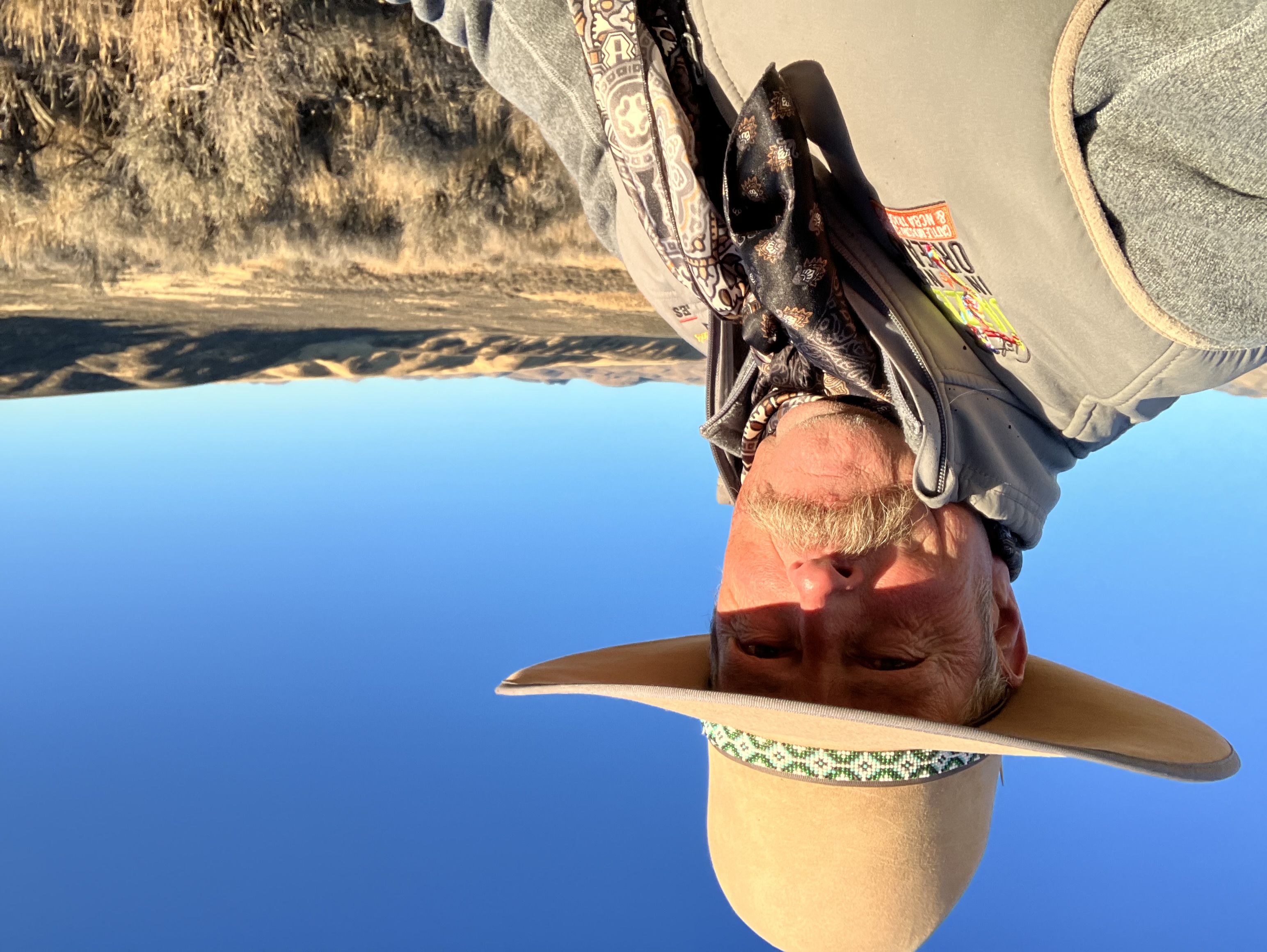
John griggs
MAGGIE CREEK RANCH
Passion for ranching runs deep at Maggie Creek Ranch, and it serves as a foundation for how the entire operation has grown into what it is today. That sense of connection is especially true for Jon Griggs.
Jon didn’t grow up knowing he would one day manage one of Nevada’s well-known cattle operations. Ranching, in fact, skipped a generation in his family. But even without a direct path into the industry, his interest in it developed over time through family ties on his mother’s side.
That connection came through his grandmother’s family ranch in southern Idaho. His grandmother had originally moved to the area to work as a teacher and eventually met her husband while living and working near the Duck Valley Indian Reservation. Later in life, the couple took jobs on a large ranch along the Nevada–Idaho border, and it was there that Jon spent his summers growing up.
With a family life shaped by his father’s military career and frequent moves, those summers on the ranch became an anchor for him. Over time, that early connection turned into something more permanent. Jon eventually followed the same path himself, hiring on as a cowboy at the very same ranch where his grandparents had once worked.
After several years on remote ranching operations, he later took a job at Maggie Creek Ranch near Elko, a move that ultimately shaped both his career and his personal life. While working in that isolated setting, Jon met a summer intern with the U.S. Forest Service who would later become his wife. Thirty-five years later, they are still together.
Working Up Through the Ranks
Jon began at Maggie Creek Ranch as a member of the cowboy crew and gradually worked his way into leadership over the course of decades. That early experience, he says, shaped how he understands the work today.
In ranching, he explains, motivation cannot be separated from practicality.
“It’s really easy to make cow work difficult,” he says, “and it’s really easy to make that work not make sense.”
In Nevada’s variable climate and terrain, decisions made without firsthand understanding of the land can quickly create complications.
His move into management came when the previous manager left. The ranch ownership brought in a consultant to find a replacement, and Jon found himself in a position where his experience and familiarity made him the most straightforward choice. He has now served as manager for 28 years and has been at Maggie Creek Ranch for nearly 35 years in total.
A Philosophy Built on Relationships
Over three decades in ranch management, Jon says his philosophy has evolved significantly. Early in his career, he viewed the biggest challenges as environmental – drought, wildfire, and difficult terrain. Today, he sees many of those challenges as fundamentally rooted in people and relationships.
Working in Nevada means coordinating closely with federal agencies, neighbors, and local partners. Jon has come to see that strong relationships are just as important to a ranch’s success as land or cattle.
After years of dealing with wildfires across Nevada’s rangelands, he learned that trust and corporation must be built long before a crisis occurs. When emergencies like wildfires happen, the strength of those existing relationships can determine how effectively people work together to respond.
As Jon shares it, “The time to build relationships with the people that you’re going to deal with on a fire… is not during the fire."
A Ranch Built on Longevity and Stewardship
While Maggie Creek Ranch operates like many large Western cattle ranches, several characteristics make it stand out, beginning with its stability. The ranch has been owned by the same family for more than 50 years, and many employees, including Jon, have spent decades working there. Some have been on the ranch even longer, including one employee Jon points out who has worked at Maggie Creek for more than four decades. Longevity has created a deep sense of place among the crew and reflects the lasting impact of long-term commitment on the ranch. It has also helped Maggie Creek maintain a strong connection with the surrounding region and build trust with neighbors and local partners.
That stability is closely tied to another defining feature of the ranch: its commitment to conservation alongside cattle production. The ranch’s owners are avid outdoorsmen, and wildlife habitat has always been a priority alongside its business operations.
One of the most important elements in that work is water. With Nevada being the driest state in the country, riparian areas are among the most valuable habitats on the landscape. The ranch sits along the Humboldt River, with multiple tributaries running through the property, making water management a central focus of its stewardship efforts. Over the years, Maggie Creek has worked to improve grazing management along these waterways, partnering with watershed groups and conservation organizations to restore riparian habitat. They have also welcomed natural ecosystem engineers such as beavers to help rebuild stream systems.
These efforts help achieve Maggie Creek Ranch’s Goal: a healthy habitat that benefits both wildlife and cattle. By combining long-term stewardship, conservation partnerships and having a deeply devoted crew, Maggie Creek Ranch has become a prime example of how working ranches can balance beef production with serving an environmental responsibility which is something that Jon believes will only become more prevalent in the future.